Essential Points:
- A forklift usually complements pallet jacks rather than replacing them
- Different forklift types suit different aisle widths and load heights
- Adding a forklift often changes how existing pallet jacks are used day to day
- A handful of clear warning signs signal when it’s time to scale
Evaluating Your Warehouse Scaling Needs
There’s a point in most warehouse operations where pallet jacks alone can’t keep up with the volume moving through the floor, no matter how well the team runs them. If you’ve already picked up used pallet jacks for sale to cover the basics, a warehouse forklift is usually the next logical step once loads get heavier or racking gets taller. It’s less about replacing what you have and more about adding a layer of equipment that can do the lifting your current setup wasn’t built for. Getting the timing right matters just as much as choosing the equipment itself, and both are worth thinking through before you buy.
Making the Case for a Bigger Fleet
Most warehouses start lean, with just enough equipment to cover day-to-day moves. That works fine until order volumes grow or storage gets denser, at which point pallet jacks start bottlenecking everything behind them, especially during peak periods when every aisle is in use at once.
This is often where teams already running used pallet jacks for sale start looking at what else the floor needs. Adding a forklift doesn’t mean retiring the pallet jacks – it means giving heavier or higher-up loads a piece of equipment that’s built for that job specifically, rather than stretching the jacks past what they’re rated for.
Forklift Types at a Glance
Not every warehouse forklift does the same job, so it helps to know what’s actually available before committing to one type.
| Type | Typical Use | Load Capacity | Best Suited For |
| Counterbalance forklift | General pallet handling | Up to 5 tonnes | Warehouses with wide aisles |
| Reach truck | Narrow-aisle racking | Up to 2.5 tonnes | High-bay storage layouts |
| Order picker | Case-level picking | Up to 1 tonne | E-commerce and mixed-SKU orders |
| Rough terrain forklift | Outdoor yard work | Up to 4 tonnes | Loading docks and uneven ground |
Matching the type to your layout matters more than raw lifting power alone – a reach truck in a wide-aisle warehouse is as much a mismatch as a counterbalance unit squeezed into a narrow one.
What Changes Once a Forklift Joins the Floor
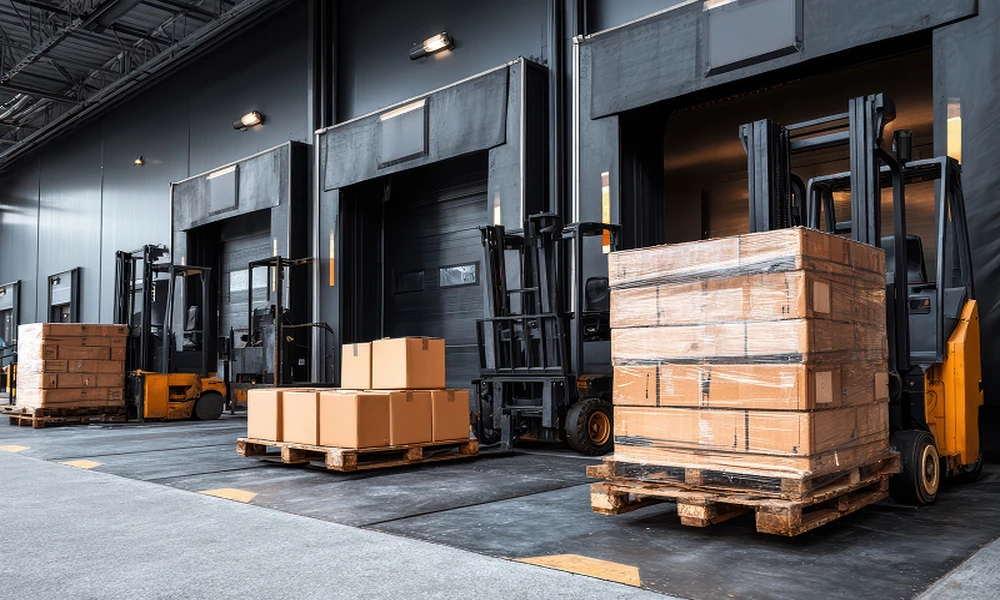
Once a forklift becomes part of the mix, the pallet jacks already on the floor usually shift into a different role rather than sitting idle.
Rather than handling every load end-to-end, used pallet jacks for sale tend to take over the shorter moves and staging work, while the forklift handles anything heavier or destined for higher shelving that the jacks were never meant to reach.
That division of labour is usually what brings the throughput gains teams are after when they scale up, rather than the forklift working alone, and it tends to show up fastest during peak order periods.
Signs It’s Time to Scale
A few signals tend to show up before a warehouse forklift becomes necessary rather than optional, and they’re usually easy to spot once you know what to look for:
- Pallet jacks are queuing at the same pinch points during peak hours, most days of the week.
- Racking has grown taller than a jack or team member can safely reach without extra equipment.
- Loads regularly exceed what a manual or powered pallet jack is rated to carry.
- Staff are spending more time waiting for equipment than actually moving product.
If two or more of these sound familiar, it’s worth pricing out what a forklift would add to the floor before the bottleneck gets worse.
Optimising Fleet Efficiency and Growth
Scaling up a warehouse rarely happens in one move – it’s usually a case of adding the right equipment at the right point, rather than replacing everything at once. Pallet jacks and forklifts end up covering different parts of the job, and knowing when to bring the second one in is often what keeps the floor running without extra hires or extra hours added to the schedule. Getting that timing right is as much about watching how the floor behaves day to day as it is about the specifications on paper.
Contact Hyster-Yale Lift Trucks Singapore to talk through your current setup and figure out what would help the floor move faster and more evenly.